Intro to Lights and Shapes
Here are the basic lights and day shapes...
If you want to review these from your Nav Rules Handbook, these can be found in rules 25 -- 30. But for now let's just focus on the basics:

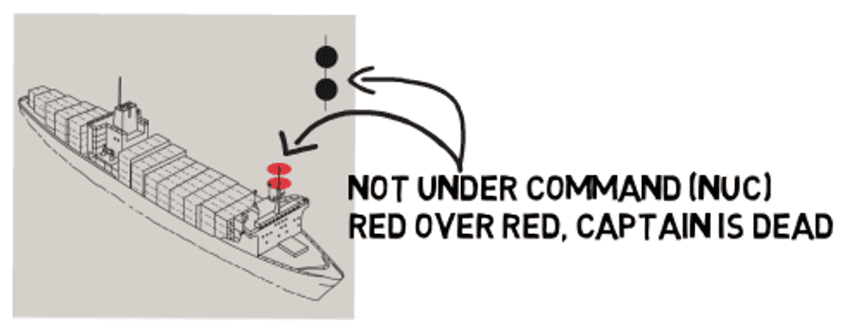
The lighting configuration for a vessel not under command is red over red. And the day shape is ball over ball. Remember "Red over red, Captain is dead."
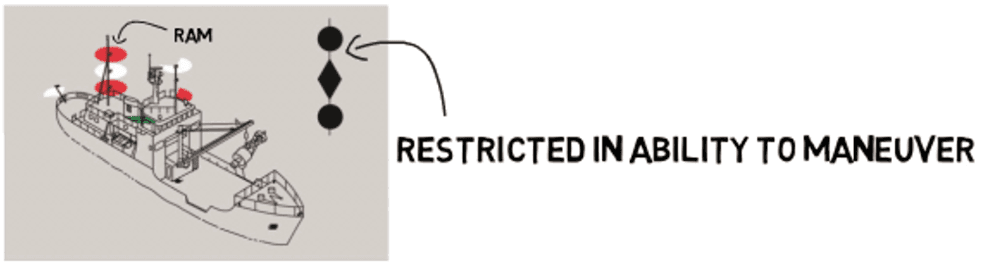
The lighting configuration for a vessel restricted in ability to maneuver is red over white over red and the day shape is ball over diamond over ball.
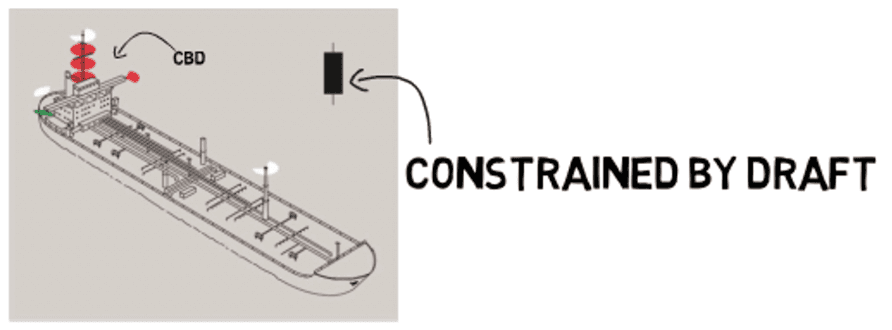
The lighting configuration for a vessel constrained by draft is 3 red lights in a vertical line and the day shape is a can.
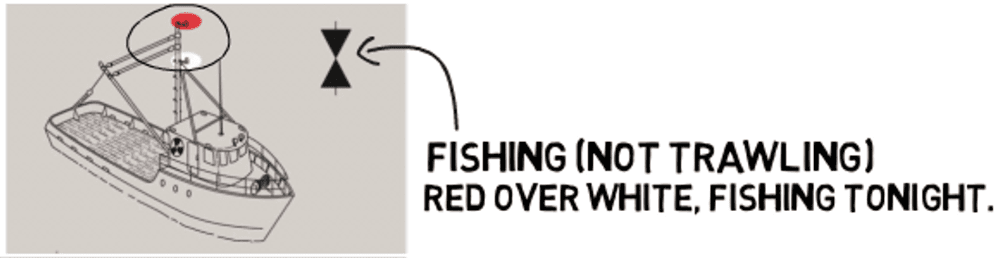
The lighting configuration for a vessel fishing but not trawling would be red over white and the day shape would be two cones, pointing together. Remember, "Red over white, fishing tonight".
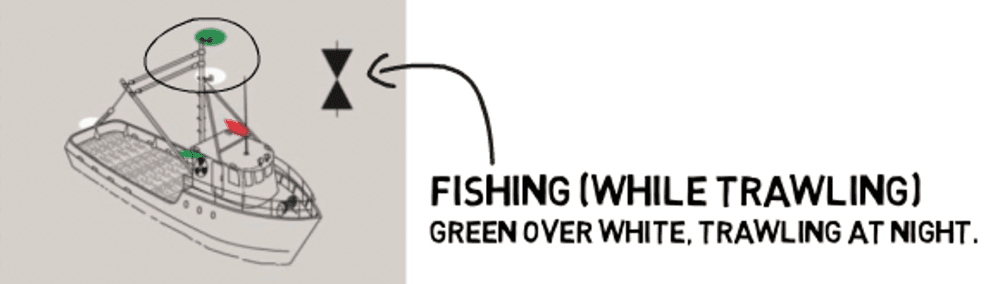
The lighting configuration for a vessel fishing while trawling would be green over white and the day shape is two cones pointing together. Remember "Green over white, trawling at night".
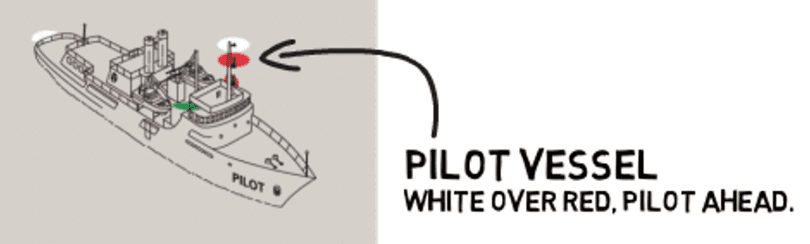
The lighting configuration for pilot vessels is white over red, and there is no special day shape for a pilot vessel. Remember, "White over red, pilot ahead"
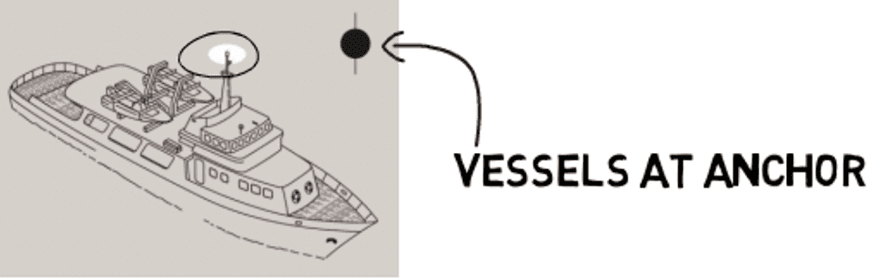
Vessels at anchor will have an all-around white light and a day shape of one black ball.
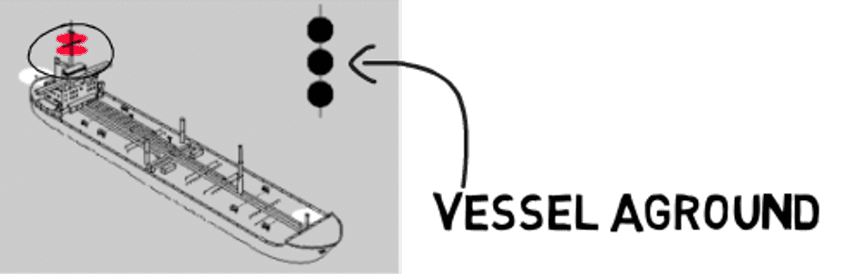
All vessels aground with have lights of red over red and three black balls vertically aligned.
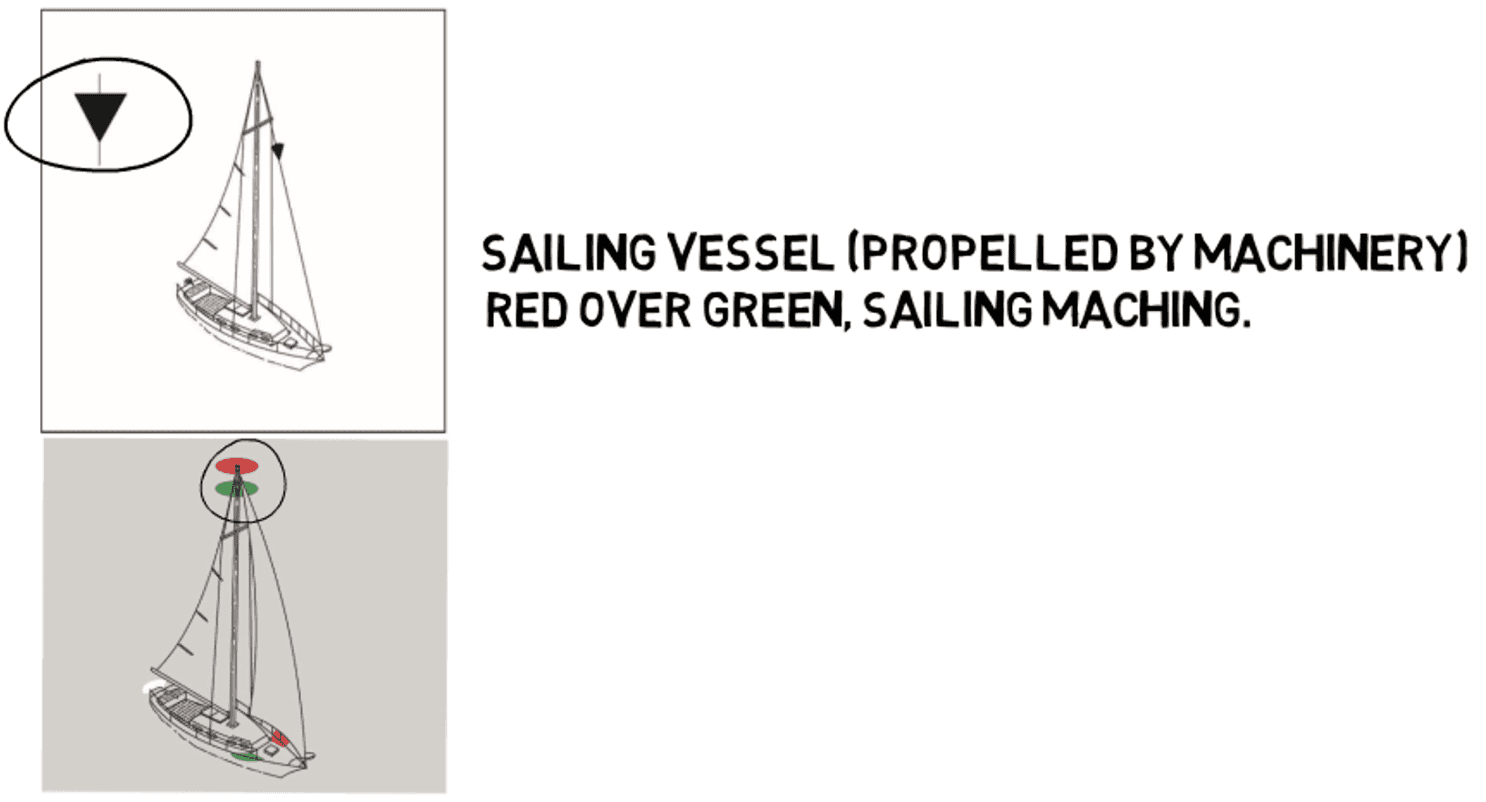
Sailing vessels will not require masthead lights unless it is being propelled by machinery, in which case it becomes a power boat. However, if it is being propelled by machinery, it will require a conical shape apex downwards during the day. Inland rules state that a vessel less than 12 meters does not require this though. It is optional to display red over green. Remember, "Red over green, sailing machine." We will discuss sailboat lights in more detail in another lecture.
As with everything there are exceptions to these rules but those we will learn later. For now, focus on memorizing these. Consider this your foundation. You may have noticed I didn't cover tow boats. They will come later because there are so many different cases. It will be a module to itself.